
The Coach Inside Your Head
Everyone has an inner coach. Not everyone has a good one.

Some of us were lucky. Somewhere along the way, a parent, a teacher, or a coach showed up and believed in us more than we believed in ourselves. They modeled resilience, hard work, and a healthy mindset. They taught us, through their actions, that failure is not the end of the story.
But many of us didn’t have that. And if you’re reading this, there’s a good chance you’ve spent more of your life being coached by a harsh inner voice than a supportive one.
Here’s the thing: that doesn’t have to be permanent.
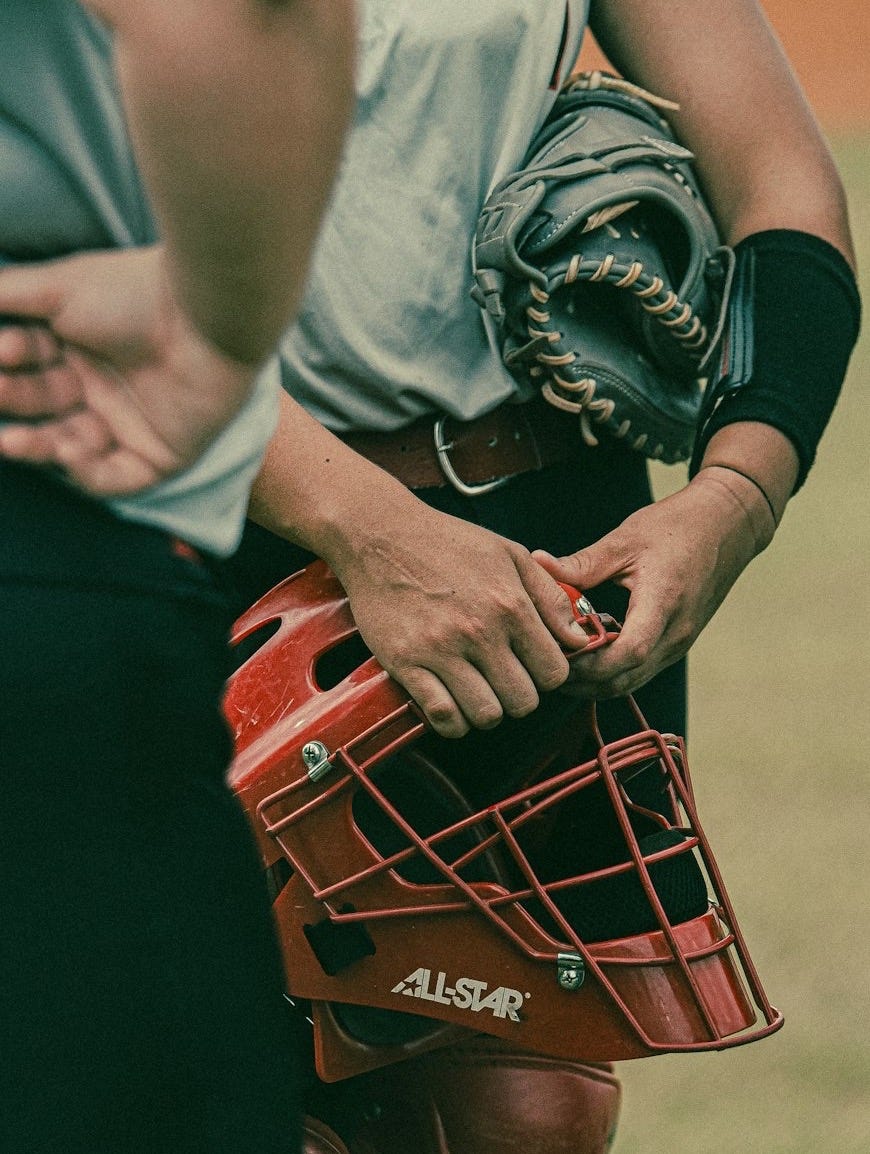
I want to share a story about my daughter and her softball coach. Stay with me. I promise it connects directly to you.
The Worst Game of Her Life
My 13-year-old daughter is a softball pitcher. She’s not a star athlete, but she’s decent. She puts in the work and gets the job done. Most of the time.
But one game was different.
It was against another team in the same league, which meant the stands were packed. Softball players, middle school teachers, high school varsity coaches, parents, grandparents, friends from school, and yes, boys. It was high-energy and exciting.
My daughter felt all of it.
She got nervous. She felt the pressure to perform, to impress. Or maybe she was just having a bad day. Either way, she started throwing ball after ball, walking batters, loading the bases. She gave up 11 runs in one inning. If you’re not familiar with softball, just know: it was bad. Worthy of a full-body cringe.
She was trying so hard to hold it together. But eventually, she signaled to her coach that she wanted out.
He called time and walked out to her. She begged him to pull her. And in a calm and supportive voice, he said “You got this. One more batter.”
The game resumed.
She was furious. If her coach wasn’t going to rescue her from the most public humiliation imaginable to a teenager, she was going to channel that anger somewhere. And she did. She struck out the next batter, and the longest inning of our lives finally ended.
The Second Decision
Two days later, they had another game. Against a strong team.
My daughter was certain her coach would start his best pitcher. Given what had just happened, that seemed like the obvious, logical choice. She was equally certain it would not be her.
She was wrong.
Coach chose her to start.
She was not, on paper, the right person for the job. But her coach wasn’t making a decision based on paper. He was making a decision based on who he knew she was and who he believed she could become. He wasn’t going to punish her for her worst moment. He wasn’t going to let her hide in the dugout and stew in self-pity. He was going to put her back out there and let her prove something to herself.
She did great. And she walked away from that game with something more valuable than a win: the quiet knowledge that she could come back from hard things.
What Kind of Coach Do You Have?
Here’s where it connects to you.
Most of us are walking around with a coach living inside our heads. The question is: what kind of coach is it?
A good coach doesn’t pull you from the game every time you struggle. They don’t bench you for being imperfect. They don’t let you off the hook just because things got uncomfortable. They know you, they believe in you, and they challenge you to face the hard thing rather than run from it.
A bad coach is the opposite. A bad coach tears you down after every mistake. A bad coach tells you that you’re not good enough, that you never were, and that you should probably just stop trying.
When you face a failure, a humiliation, rejection, or a painful setback: which coach shows up?
Do you let yourself hide in the dugout? Or do you tell yourself you’re strong enough to stay in the game?
Do you spiral into self-pity and self-loathing? Or do you take a breath and step back up to take another risk?
Do you punish yourself for being less than perfect? Or do you see the stumble as an opportunity to build something stronger?
Ignore the Cheap Seats
Brené Brown has a concept worth holding onto here. She talks about only taking feedback from the people in the arena: the ones who know you, who are in it with you, who have skin in the game. The people in the cheap seats, the ones throwing criticism from a comfortable distance, those voices don’t get a vote.
The same is true for the voices inside your head. Not every thought that surfaces after a hard moment deserves your attention. The voice that piles on, that catastrophizes, that says you should have known better: that’s not your coach. That’s just noise from the cheap seats.
Your real inner coach is the one that knows your full story. The one that has seen you struggle and come through before. The one that believes the setback is not the final score.
That is the voice worth listening to.
Coaching Yourself Forward
Here’s the good news for those of us who didn’t grow up with that steady, believing presence in our corner. We can develop it ourselves. With the right tools and practice, we can learn to manage our own mindset without always needing someone else to talk us through it.
It starts with a choice about what kind of coach you want to be for yourself.
Are you coaching yourself for the performance of this one moment, the kind that leads to burnout and self-judgement when things get hard? Or are you developing yourself into someone with the mental fortitude to face anything and come out on the other side more capable than before?
My daughter’s coach wasn’t trying to win that one game. He was developing a human who could trust herself under pressure. That’s a long game. And it’s a worthwhile one.
You deserve a coach who plays the long game with you.
So: what would your ideal inner coach say to you right now, standing out there on that field?
If you're not sure where to start with developing your self-coaching skills, I'd love to be your coach. Sometimes the best way to learn something new is to have someone model it for you first. That's exactly what I'm here for. Book a free consult and let's work on it together.